Showing posts with label childrearing. Show all posts

Friday, June 29, 2012

Vincent's Sweets: A Baking Experiment

Vincent has asked me a few times if he can bake cookies - from his own recipe that he makes up. I haven't wanted to let him because I have a miser's abhorrence of waste, and given his limited culinary knowledge, I anticipated having to throw out the mess of inedible ingredients post-baking.

That's probably not a good reason to quell curiosity and experimentation. The other day, I decided to let him try, with the caveat that he make a small batch. Here's how it went:

Vincent's Peanut Butter Chip Banana Cookies with commentary and handy tips from V

In the wet bowl:
1 egg (whisk)
1/8 cup oil ("hold the cup upside down a little bit; oil takes a while to come out"
1/8 cup milk
1 banana (he asks me to slice; he then smashes with the whisk)

V: Why don't we make a recipe store here if my cookies turn out good?

In the dry bowl:
1 tsp flour ("No, 1/2 a cup! Maybe two of them")
1 cup flour
1 tsp sugar (for next time, he suggests a tablespoon)
1 tsp salt (I said no to this amount)
2 tsp baking powder
1/2 cup peanut butter chips

V: Shouldn't we write what they taste like? They taste like artificial banana flavouring with cookie dough and a little bit of sugar.

In sum:
V: I'm proud. I enjoyed making them, but I'm not going to enjoy the dishes.

I was very impressed that he'd remembered to separate wet and dry ingredients and had remembered all of the major components to most baked goods. He also chose fairly accurate measuring cup and spoon sizes for the ingredients. The cookies tasted a bit biscuit-like but definitely edible. 

Saturday, June 9, 2012

Photoessay: What does a six year old find interesting about gardening?

My son got a camera for his birthday. He came to work with me last Tuesday. Here's what he thought was fit to shoot:


Raspberries

The windows look like arrow slits in a medieval castle.

Bedding plants

Me opening a can (there were many pictures like this)

Wheelbarrow

Disgruntled mom (see "Gumbo")

Himself

Saturday, April 28, 2012

Farm Safety: The Real Story

U.S. Labor Department has just withdrawn a set of proposed safety regulations for young people working in agriculture. The regulations proposed to disallow children under 16 from operating machinery with power takeoffs, and from working in feed lots, grain silos and stockyards.

Under these regulations, my brother wouldn't have been able to pay for his university education by farming my grandmother's land. And my dad wouldn't have been able to tell the story about riding his bicycle down the road when he was ten, and seeing a driverless tractor coming toward him. As it approached, he realized it was being driven by his five-year-old cousin who couldn't be seen above the steering wheel. My brother and my dad's cousin survived, just as I survived using the rotary mower, as a subcontractor mowing besides the railway tracks, at age 13.

But the thing is, my dad didn't survive a farm accident, three years ago. Farming is dangerous. A Stats Canada Report shows that "Agriculture is one of the industries with the highest rates of fatal injury. From 1991 to 1995, that rate varied between 14.9 and 25.6 per 100,000 workers in Canada... Agricultural production thus ranks as the fourth most dangerous sector, behind mining, forestry and construction ...With regards to non-fatal injuries among agricultural producers, studies indicate that annual frequencies are generally in the range of 5% to 10% of the population." It's not just because the average age of farmers is really high: the injury death rate for young children who live on farms is almost twice that for all young children in Canada.

Maybe it is more effective to educate about farm safety than to disallow children from working on farms - this is the tack the American government is going to take. However, I think there are two essential pieces to this news that have not been emphasized. First, these labour laws would not have applied to children working on their parents' farms. How many children under the age of fifteen (need to) work on other peoples' farms? Yet, it wasn't only 4-H instructors complaining about these laws. News articles were full of emotional manipulation like this:
e here: http://www.sacbee.com/2012/04/27/4447875/child-labor-groups-upset-farm.html#storylink=cpy

On the Sombke family farm four kids learned everything they know about the trade from their parents..."I wouldn't have worked out here, I would have taken a completely different, completely different path in life," Brett Sombke said.
The Republicans were all over this overblown rhetoric, for their own political gain. However, despite the wholly inaccurate portrayal of the proposed laws in this article, the closing paragraph holds the key to another very important piece of the puzzle:
Brett says it's hard enough to find people to work during the spring and fall. He says that without kids being able to perform certain tasks on family farms the traditional meaning of family farm could end.
None of the farm groups protesting this law have mentioned the bigger issue behind it - the need for cheap or free labour on family farms. How many bankers or plumbers do you know who need to take their kids to work just to keep food on the table? (Hint: none.) And it's not because they are so much better at their jobs than family farmers are at theirs. It's because small family farmers are getting screwed every which way by input sellers, by processors, by commodity speculators, by consumer expectations of cheap food.

And *that* is the real problem.

And, it might even have something to do with farm safety. Stats Canada also says that farm receipts are inversely proportional to farm accidents.

Saturday, March 17, 2012

You can lead them to water...


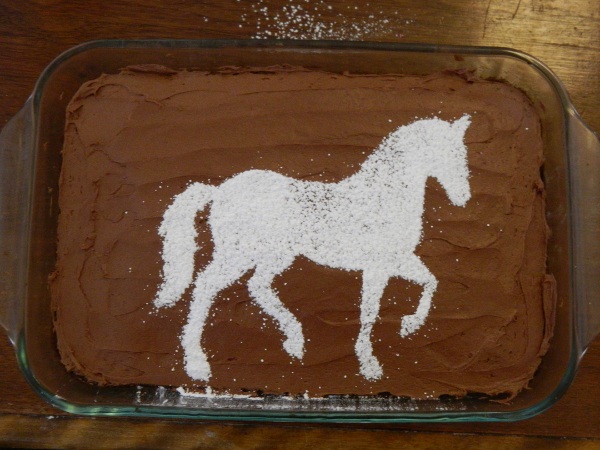
As requested, a horse cake, made from the best devil's food cake recipe ever.


The now three-year-old who refused to try even a bite of the cake.

Friday, February 24, 2012

Starting 'Em Young

I asked my five year old what he would like to grow by himself this summer (note, I didn't give him a choice about growing something), and he said, "Edible flowers!" He thought the calendula in the Richters catalogue looked pretty good (although there is a divide on the internets: is it peppery, or bitter?)

I figure the earlier you start them, the better. This is good advice for getting kids to do chores, so why not with food production and preparation?

Here he is at age two, already taking it seriously.

With a farming grandpa, how could he help but?

 It wasn't all work, though.
 
There was reward.

 And, idealist that I am, I am hoping that the pleasure of work will become its own reward.

Friday, February 17, 2012

Hospital Food - Symptom or Cause?

I've spent way more time consorting with our fine, single-payer healthcare system in 2012 than I have in the past few years combined. I'm just back from an overnight stay on the pediatrics ward. All is fine, or so we are assuming until tests come back. In fact, my daughter had such a good time there that she didn't want to leave. And she discovered a new, delicious food - peanut butter and banana sandwiches.

The pediatric toddler menu was very interesting. Breakfast was milk, cornflakes, a slice of wholewheat toast with strawberry jam option, and apple juice (which my daughter insisted on eating with a spoon). Lunch was the aforementioned sandwich, chicken noodle soup, milk, canned peaches, and apple juice. Notice anything missing?

That's right, the fruit-and-vegetable category was entirely filled by fruits. I don't know if the hospital has assumed that children won't eat vegetables, or has discovered from experience that they don't (in which case, do they only not eat vegetables prepared in typical hospital-food fashion, boiled to death?). I admit that I have little experience with children not eating vegetables - whether because of luck, parental modelling of finding delight in vegetables, or perversity, our kids like almost all vegetables, and as they age they discover the odd vegetable they refused has become tasty.

I mostly keep quiet about this, though, because perusing the internets tells me that my children have freakish tastes and I'd better not offer advice or brag about them. It's a very touchy subject, and people tend to assume that opinions are actually judgments on their parenting. Especially since it often takes the form of a struggle: parents puree and disguise vegetables, bargain with their children to get a few tastes past the gag reflex, and sometimes, give up and only serve the vegetables that are tolerated.

I am of the generation that ate what was on their plate Or Else, and I have vivid memories of crying while I choked down purple cabbage with soya sauce and sesame seeds, and bit beets in half to swallow the chunks down with milk. I still don't like beets, although I'll cook them for my husband and son (as of last summer, my daughter didn't like them yet). I have a bit of the Or Else mentality - not enough to cause a major power struggle - but I've rarely felt the need to employ eating rules.

What do you think? If children are presented with a variety of good food, eating is joyful, and coercion is not employed, will they come to eat their vegetables? And can this be done in a hospital?

Thursday, February 9, 2012

The next logical step

At lunch today:

Me: What did you do in school today?

V: Mrs. C made jello.

Me: And what did you learn?

V: That you need to put boiling water on it. Why can't it be cold water?

Me: Boiling water helps the crystals dissolve more quickly.

V: Why couldn't it just be hot water?

Me (guessing, because I don't have a hand-held internet-capable device and have made jello twice in my life): It might be because of the gelatin in it. (Turns out, I'm right, if imprecise)

V: What's gelatin?

Me: Well, it comes from bones and horses' hooves. (I'm wrong about the latter. Oops.)

V starts looking sad. "Some people think that it's best to use all of the animal, if it is killed for meat," I say. His lip trembles. "Do you want to stop eating meat?" I ask.

"I like how it tastes, but I don't want animals to be killed," he says. "Why don't we eat meat from dead people, like if they're old?"

Hmm. "Well, people tend to think that eating other people is gross. And old people would likely be tough and have medications infusing their flesh." (Can you tell this is off the cuff?)

"I'd rather eat meat from people," he says. "Unless they were murdered. Because then people might think we are murderers too."

Tuesday, January 31, 2012

Watching FRESH with my five year old

FRESH the movie is streaming for free until tomorrow, so I thought I'd finally get around to watching it, and write a review. Eleven seconds in, Joel Salatin starts calling, "Pig, pig, pig, pig" and my 5 year old son, Vincent, ran over to the laptop to take a look. I had a brilliant idea. I would watch the movie with him and then use his insights to write a review from a child's point of view. You, blog audience, would eat it up.

Happy to be exploited for purposes of education.

We watched the pigs happily graze the pasture, and I remarked on how healthy they looked. I explained what "inconvenience" meant when Vincent asked, and guided his responses to the subsequent shots of supermarket packages - "That doesn't even look like food, does it?". I was being so educational!

And didactic. Then, at 2:29, the crates of baby chickens appeared on screen and Vincent was instantly on the verge of tears. "Why are they in cages?!"

And from that point on, I let him lead the viewing. We talked about the metaphor of the factory being applied to all areas of life. He asked what monocropping meant and we talked about the benefits of biodiversity. He was fascinated by the pictures of fluorescent bacteria, and we talked about antibiotic resistance. Half way through the movie, he started putting ideas together about how we could keep weeds out of our garden without using chemicals. "We could put a small greenhouse in it with not too many cracks and a small door so it would be hard for weeds to get in, plus there would be a fence of corn outside it, to keep the plants that are living healthy."

Then he threw me for another loop. As we were learning about the nutrient cycling through the tilapia tanks at Will Allen's Growing Power, Vincent said, "I think the fish should be free to swim about." Hmm. "Well," I hedged, "People think that fish don't have the same kind of ...brains... and feelings... as..." He stared me down. "I think they should have lots of room to swim about."

I didn't come up with a good answer for that one, but I know the topic will come up again - and it should. These are big questions - what makes us human, yet animal, and how do we decide what sentience is? How and why do we, and should we, play gods? What is our role in the food system?

Watch this movie with your kids! Or grab someone else's kid and watch with them. I promise you that you will learn something you didn't know, and see something in a new way.

Friday, November 18, 2011

Ketchup may no longer be a vegetable, but pizza is.

If you've been following American food news, you've probably heard that the US Congress has voted to make pizza a vegetable. (No, the link isn't to a Wall-E clip.) More precisely, the guidelines for nutrition in  school lunches now assert that the two tablespoons of tomato sauce on a slice of pizza counts towards the weekly calculation of vegetable servings. The proposal to limit servings of potatoes (often in the form of hashbrowns and fries) per week was also dismissed.
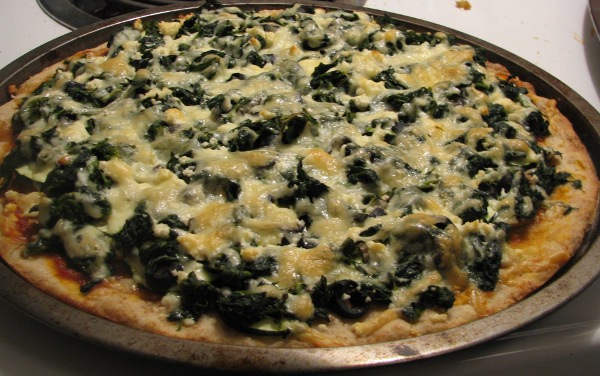
Probably not this pizza.
I went to a "community school" for grades seven and eight. It was located in a newly gentrifying area, and had a mix of incomes represented, tending to the lower end. It didn't have a cafeteria or lunch program (very few schools in the city did) but I remember getting weekly donations of free muffins. I usually chose chocolate-chocolate chip: sweet, fatty, calorie-dense, likely nutritionally void. It didn't occur to me at the time to wonder at the donation. Cynically, I wonder now - was it a tax write-off? Past-date goods? An attempt to make us future muffin customers? Or just a treat for the poor kids? What, exactly, was the purpose of the muffin?

It is hard not to be cynical when looking at the lobbying that was behind Congress's decision. Food companies including ConAgra, Coca-Cola, Del Monte Foods and makers of frozen pizza like Schwan argued that the proposed rules would raise the cost of meals (14 cents per meal according to the Department of Agriculture) and require food that many children would throw away.

Here's some background on school lunches in the United States.
In fiscal year 2009, federal school nutrition programs underwrote more than five billion meals served to over 31 million students. Students are entitled to free lunches if their families’ incomes are below 130 percent of the annual income poverty level guideline established by the U.S. Department of Health and Human Services and updated annually by the Census Bureau ($29,055 for a family of four in 2011). Children who are members of households receiving food stamp benefits or cash assistance through the Temporary Assistance for Needy Families block grant, as well as homeless, runaway, and migrant children, also qualify for free meals. Students with family incomes below 185 percent of poverty are eligible for a reduced price lunch. Of the five billion meals provided to 31.8 million students during the 2008-09 school year, 55 percent were free of charge, 10 percent were reduced price, and the other 35 percent were paid.
That's 17.5 million children living in poverty. Surely there is a duty to provide them with nutrition, not the cheapest mass-produced schlock available. If the government is not going to address societal problems that perpetuate poverty, is not properly funding and regulating school meals the least it can do?

Libertarians will cry, "It's the parents' responsibility!" Sure, in an ideal world, with parents who have nutritional knowledge, cooking skills, and access to cheap, healthy ingredients. We don't live in that world. Let's work with the one we have.

Friday, September 16, 2011

Gourmand

In honor of Friday, something apolitical - unless you're a breatharian: Kids take good eating seriously.


Gourmand from Eden Balfour on Vimeo.

Plum-eater's mom in 1977. Good genes.

Saturday, July 9, 2011

Thursday, June 2, 2011

Homemade Bread

Boy, was I jealous of the other kids in elementary school. They got bologna sandwiches made with squishy, white Wonderbread, and I got crumbly, dense homemade brown bread sandwiches, usually with lumps of homemade sausage and pickle. I tried to hide them behind my hands as I ate.

And now, I am going to inflict the same indignity upon my children. Because my mom was right, after all.


Ingredients for the sponge
Sponge after rising for an hour
Punch me! Punch me!

Pre-kneading
Mmmmmm.

Sunday, April 3, 2011

The Family Meal: Easier than Ever!

There's a lot of talk lately in certain circles about the importance of the family meal. A typical internet post on the topic will tell you that "research shows" eating together as a family will result in a cornucopia of positive results:
  • Everyone eats healthier meals.
  • Kids are less likely to become overweight or obese.
  • Kids more likely to stay away from cigarettes and alcohol.
  • They're less likely to use illicit drugs.
  • School grades will be better.
  • You and your kids will talk more.
  • You'll be more likely to hear about a serious problem.
  • Kids will feel like you're proud of them.
  • There will be less stress and tension at home.
I like to cook, and I come from a family who always sat down to eat dinner together. I am doing the same with my children. Works for us. However.

There seems to be an unstated assumption that you could be running a crack house but if you started sitting down to dinner with your kids - even take-out pizza, as one site suggests -your life would turn around. I don't know about you, but it seems a little suspect that the one commonality amongst high-performing families in these studies is that they sit down to dinner together.

But let's suspend our disbelief, and ignore the probability that families that have the time and resources (knowledge, tools, money) to prepare meals and eat them together probably also have the time and resources to help the children with homework.

I have discovered an even easier way to increase your children's grades and nutritional intake:

Eat Broccoli Together.

Specifically, Romanesco broccoli.

Broccoli Romanesco florets (photo by Alfredo Matacotta)

How cool is that? Fractal vegetables. As the blogger from Love Apple Farm says, "You could steam this baby whole, present it to your perpetually bored lachanophobic teenager, and with any luck, get him to eat his veggies AND start a conversation about molecular nanotechnology."

Let me know how this magic bullet works for you! I'd especially appreciate if you could introduce this to some malnourished poor families, preferably with a tone of condescension, and report back on the results!

Wednesday, March 23, 2011

Gendered Doughnuts

My partner and I are not sporty types, but I'm trying to keep this from our kids in the hopes that they will be encouraged to discover the joys of exercise that I've heard so much about. So we took the kids to cheer on our nephew in a hockey game last Sunday.

After the game celebration of Canadian identity, Vincent's 11-year-old hockey star cousin took four-year-old Vin* to the Tim Hortons in the sports complex for a donut. Or a doughnut. Whichever is Canadian.

Vincent chose the "fanciest" doughnut and showed it to us, beaming.


It is a very pretty doughnut.

I don't give a hot goldarn if my son wants to eat something fancy and pink. What I want to know, though, is how to prepare him for a world that believes that certain foods are gendered and will respond to such choices with derision.

*I have a vague feeling I ought to pseudonymize my children.  Something to do with safety... ?